Water Damage Restoration Columbia, MD
24/7 water damage restoration in Columbia, MD. The restoration team extracts standing water, dries finished basements and townhomes to the IICRC S500 standard and documents every step for your insurance claim.
(888) 535-8182Start the Columbia dry-out now- 24/7 dispatch
- IICRC S500 drying standard
- Truck-mounted extraction
- Daily moisture readings
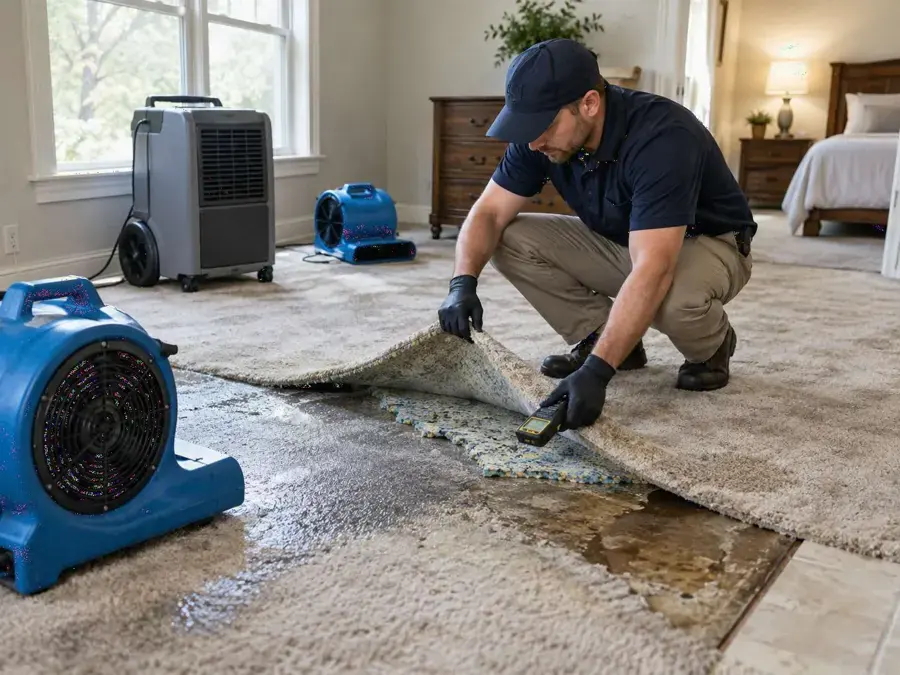
Water Damage Restoration Services in Columbia, MD
Water and sewage only, grouped the way water finds its way into a Columbia home.
Basements and what sits under them
Finished lower levels on sloped, wooded lots take most of the water in Columbia.
 Finished Basement Flooding CleanupCarpet, pad, drywall and framing in a finished lower level, dried and verified.View service
  Sump Pump Failure CleanupA dead pump or an overwhelmed pit, extracted and dried below grade.View service
  Sewage Backup CleanupCategory 3 backups contained, removed and treated with antimicrobial.View service
 When the plumbing lets go
Supply lines, water heaters and washers hidden behind finished walls.
 Burst Pipe CleanupSupply lines that split behind finished walls, extracted and dried inside the cavity.View service
  Frozen Pipe CleanupJanuary cold snaps that split pipes in exterior walls, garages and crawl spaces.View service
  Water Heater Leak CleanupTank failures that flood a utility room and the finished rooms beside it.View service
  Washer & Appliance Leak CleanupWasher hoses, dishwashers and ice maker lines that let go while nobody is home.View service
 Water coming down from above
Ceilings, roofs and the summer cloudbursts that come off the Patuxent valleys.
 Ceiling Leak Water DamageBathroom and plumbing leaks upstairs that soak the ceiling below.View service
  Roof Leak Water DamageWind-driven rain and flashing failures traced from the attic down.View service
  Storm & Flash Flood CleanupCloudburst runoff through window wells, doors and walk-out basements.View service
 Extraction, drying and the buildings around them
The core dry-out work, plus townhome rows and Columbia Gateway offices.
 Water Extraction & RemovalTruck-mounted extraction pulls standing water out before it wicks into walls.View service
  Structural Drying & DehumidificationFraming, subfloor and cavities dried to the IICRC S500 goal, then verified.View service
  Townhouse & Condo Water DamageWater that crosses a shared wall or comes down from the unit above.View service
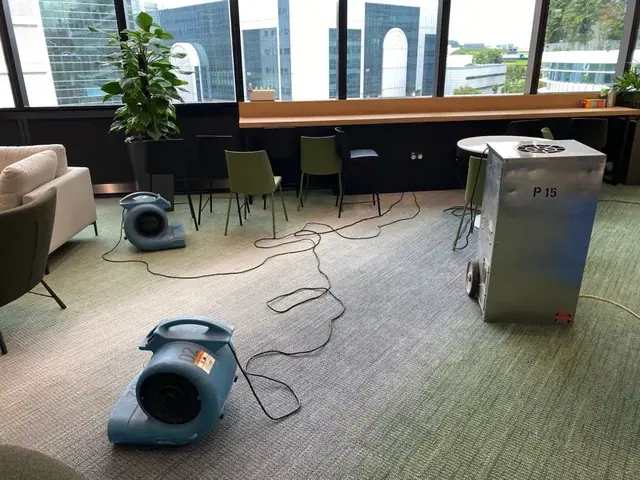
  Commercial Water Damage RestorationOffices, shops and Columbia Gateway suites dried with the doors kept open.View service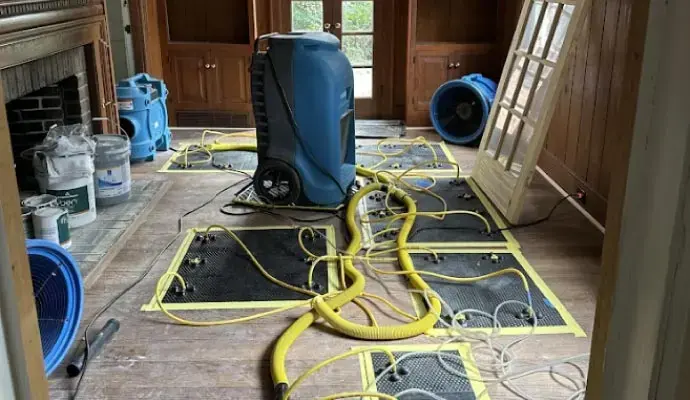
Water damage experts for Columbia's villages, day and night
Columbia was built as a planned community of ten villages, and the housing shows it: townhome rows around shared courts, garden condos near the village centers, and colonials and split-levels on wooded lots that slope toward the Patuxent valleys. Most of those homes have a finished lower level, which is where water does the most damage.
The restoration team handles the losses that come with that housing: a washer hose in a townhome basement, a water heater beside a family room, a sump pit that falls behind in a summer storm. The drying team dries to the IICRC S500 standard and documents every step for the claim.
Inside a Columbia dry-outHow a water loss is handled in Columbia
A finished dry-out follows the same order every time.
- 1
Moisture mapping
The tech who does the walkthrough maps what is actually wet with meters and thermal imaging before any equipment goes down.
- 2
Extraction
The extraction crew pulls standing water with truck-mounted extraction so it leaves the house instead of soaking the next room.
- 3
Air movers and LGR
The drying team sets air movers to the evaporation load of each room and LGR dehumidifiers to pull the moisture back out of the air.
- 4
Daily readings
Readings go into the drying log every day, and equipment comes out only when the structure matches a dry reference.
What to do while the water is still moving
Mold can start within 24 to 48 hours, so these four moves buy the most time.
- Step 1Shut the main
Close the main shutoff, usually where the water service enters the basement or utility room.
- Step 2Kill power to wet circuits
Switch off breakers for wet rooms, but only if the panel itself is dry.
- Step 3Stay out of standing water
Keep clear of water near outlets, cords and appliances.
- Step 4Photograph, lift, then call
Photograph before moving anything, lift rugs and valuables, then call to get drying started.
All water damage categories covered in Columbia, MD
Category 1, clean water
A burst supply pipe, a water heater or a tub overflow. Extracted and dried in place before it sits long enough to turn dirty.
Category 2, gray water
A washer drain, a dishwasher or a sump overflow. Carries some contamination, so soaked pad and porous materials are cleaned or removed.
Category 3, black water
Sewage backups and storm runoff. Contained, porous materials removed, surfaces treated with an EPA-registered antimicrobial.
Sewage backup cleanupWhat does water damage restoration cost in Columbia, MD?
In Columbia, MD, water damage restoration typically runs $1,000 to $8,000 or more, depending on the water category, the square footage, the material class and how fast drying started. A contained clean-water leak sits at the low end; a finished basement soaked by storm water or sewage sits at the high end.
- One or two rooms from a supply line or appliance
- Extraction and in-place drying
- Three to five days of readings
- Carpet, pad and wall base affected
- Flood cuts where readings show wet cavities
- Air movers and LGR dehumidifiers
- Sewage or storm water, Category 3
- Porous materials removed, antimicrobial applied
- Containment and extended drying
For a planning range, try the water damage cost calculator or the drying time estimator.
Water damage dried to the IICRC S500 standard
- IICRC S500 drying standard
- Truck-mounted extraction
- Daily moisture readings
- Structural drying, not just surface
Equipment stays until the readings say dry, not until the room looks dry. The drying goal is wet materials within 2 to 4 points of a dry reference, and Class 1 through 4 sets how much equipment each room needs.
The gear a real dry-out runs on
- Truck-mounted extraction pulls standing water out of the house.
- Air movers set to the evaporation load of each room.
- LGR dehumidifiers, and desiccants for Class 4 materials.
- Thermal imaging and pinless meters find water behind walls.
Documentation for your insurance claim
- The moisture map from the first walkthrough
- Daily psychrometric and moisture logs
- Timestamped photos taken before any demolition
- The category and class of the loss
- A line-item scope in the format adjusters use
A burst supply pipe is treated differently from rising surface water, which falls under flood coverage. Coverage depends on your policy, so it is worth checking with your own insurer.
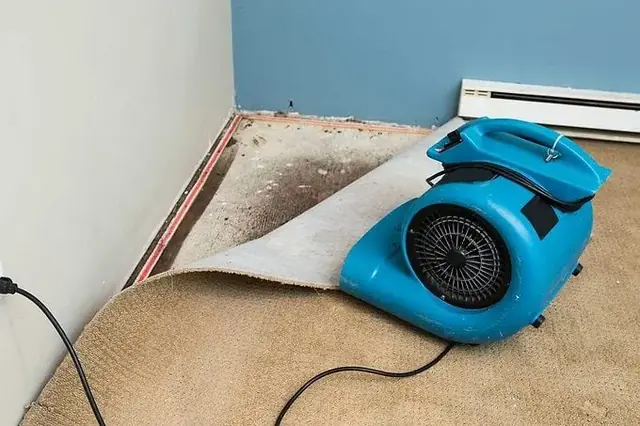
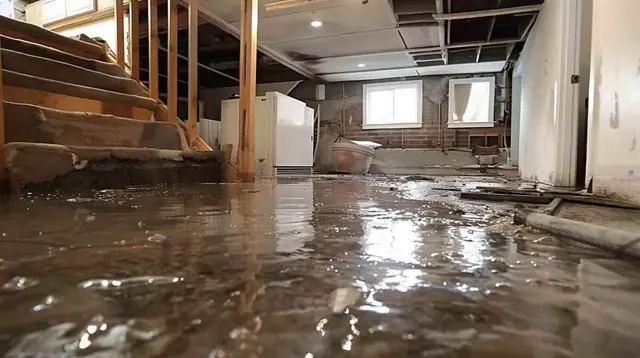
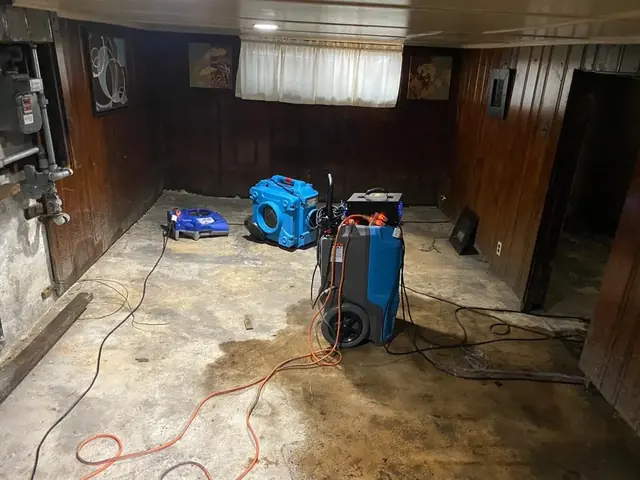
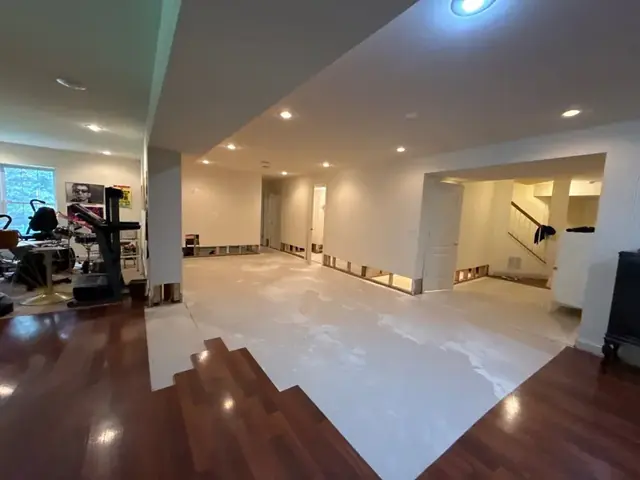
What a water damage dry-out looks like in Columbia
Columbia's ten villages and the Howard County ZIPs around them
ZIP codes 21044, 21045 and 21046, plus the towns on Columbia's edges, day or night.
- Wilde LakeBryant Woods, Faulkner Ridge, Running Brook
- Harper's ChoiceLongfellow, Hobbit's Glen, Swansfield
- Oakland MillsThunder Hill, Talbott Springs, Stevens Forest
- Long ReachPhelps Luck, Jeffers Hill, Kendall Ridge
- Owen BrownDasher Green, Elkhorn, Hopewell
- Hickory RidgeClemens Crossing, Clary's Forest, Hawthorn
- Kings ContrivanceDickinson, Huntington, Macgill's Common
- Town CenterLakefront, Merriweather District, Symphony Woods
- Dorsey's SearchDorsey Hall, Feather Mill
- River HillPheasant Ridge, Pointers Run
Columbia ZIP codes
- 21044
- 21045
- 21046
Nearby places and ZIPs
Ellicott City, Elkridge, Clarksville, Fulton, Maple Lawn, Savage, North Laurel, Jessup.
- 21042
- 21043
- 21029
- 21075
- 20759
- 20763
- 20794
- 20723
One call reaches Columbia water damage pros, 24/7
The restoration team is on call around the clock for all ten villages and for Ellicott City, Elkridge, Clarksville and Fulton, with extraction and drying equipment ready for a flooded lower level at any hour.
Why Columbia homes take on water
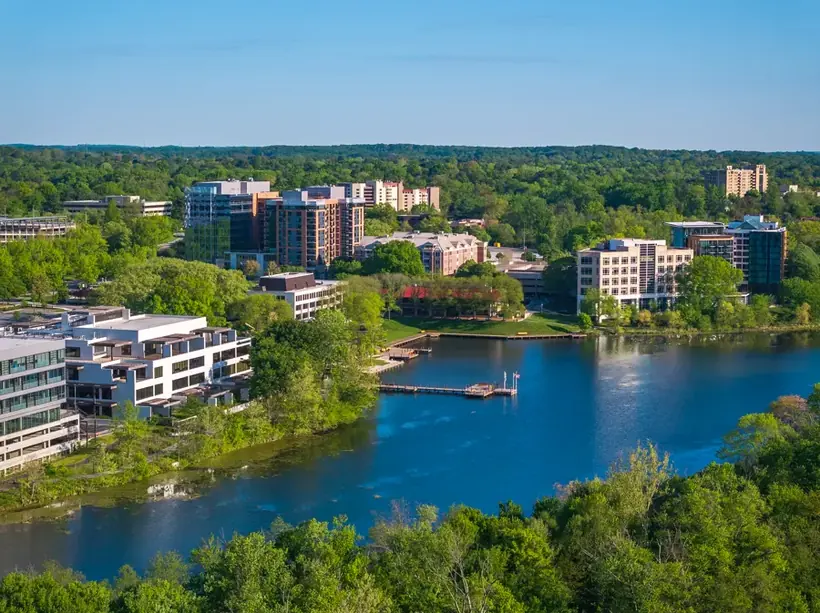
From Lake Kittamaqundi and Wilde Lake to Lake Elkhorn, the lakes, wooded lots and townhome courts that make Columbia pleasant also shape how water gets inside.
- Finished lower levels on sloped, wooded lots take water from sump pits, window wells and walk-out doors.
- Summer cloudbursts over the Little Patuxent and Middle Patuxent valleys overwhelm gutters and yard drains, as the 2016 and 2018 Ellicott City floods showed next door.
- Townhome rows and garden condos share walls and ceilings, so a leak in one unit reaches the next.
- Mature trees send roots into sewer laterals, and January cold snaps split pipes in exterior walls and garages.
Columbia water damage questions, answered
How fast can a restoration crew get started in Columbia?
The restoration team treats active water as urgent, day or night, across all ten villages and the towns around them. Water keeps spreading into drywall and subfloor for as long as it sits, so the first call matters more than the first repair.
Is water damage covered by insurance in Maryland?
A sudden and accidental loss, such as a burst supply pipe, is commonly covered after the deductible, while surface flooding needs separate flood insurance. Coverage depends on your policy, so it is worth checking with your own insurer.
What causes most water damage in Columbia homes?
Failed water heaters and washer hoses in finished lower levels, sump pits that fall behind in summer cloudbursts, leaks between townhome units, sewer laterals blocked by tree roots and pipes that split in January cold snaps.
How long does it take to dry a house after water damage?
A contained Class 1 or 2 loss usually dries in three to five days after extraction; hardwood, plaster and concrete take longer. Equipment comes out when the readings say dry, not on a date.
What is the IICRC S500 standard?
IICRC S500 is the industry drying standard. It sets how water is categorized, how much equipment a room needs and how dryness is verified.
What should I do right now while the water is spreading?
Close the main shutoff, switch off power to wet rooms only from a dry panel, stay out of standing water near outlets, photograph everything before moving it, lift rugs and valuables, then call.
What is the difference between water mitigation and repair?
Mitigation stops the damage: extraction, removal of what cannot be saved, and drying. Repair, such as new drywall and flooring, starts after the structure is verified dry.
When does drywall have to come out?
When it sags, crumbles, holds Category 2 or 3 water or hides wet insulation. Damp drywall from clean water is often dried in place.
Why is sewage handled differently?
Sewage is Category 3 water the moment it happens. Porous materials it touches are removed, surfaces are treated with an EPA-registered antimicrobial, and the work area is contained with HEPA air scrubbers.
How is the cost of water damage restoration calculated?
By the water category, the square footage, the material class, the equipment days and how fast drying started, listed on a line-item scope.
Water spreading in a Columbia home right now?
(888) 535-8182Talk to someone about the water nowWater in your Columbia home? Call now.
The extraction crew removes the water, the drying team dries the structure to the IICRC S500 standard, and every reading goes into the claim file.